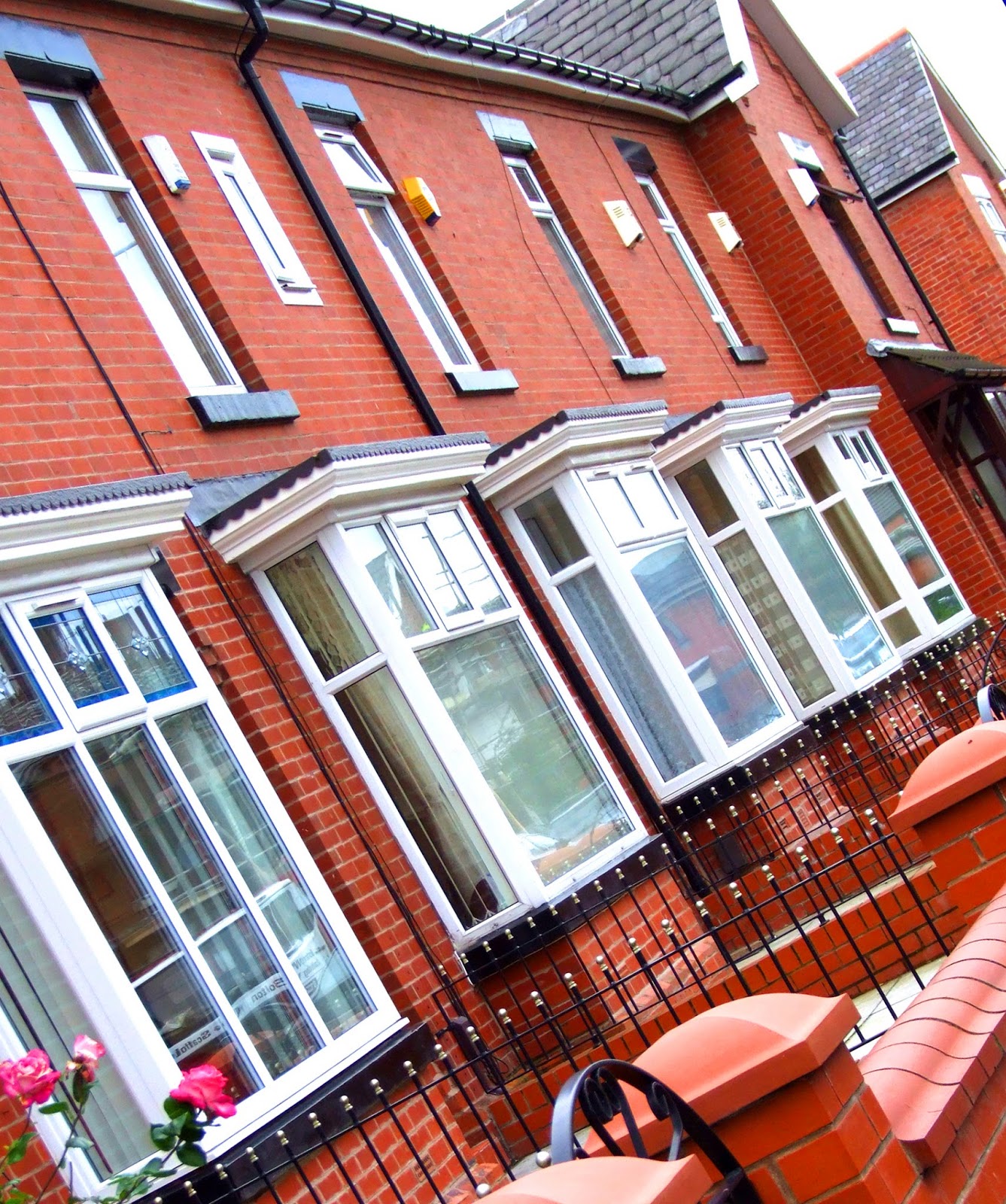
How owners of a terraced house close to a town centre can make money from their home
Last week I explained how the internet is allowing us to exploit the money making power of our homes.
This week I will be explaining how owners of a typical, centrally located, terraced house can make enough money from their home to go part-time, or even quit their day job completely.
Space is at a premium in the middle of our towns and cities. It is this space premium that offers excellent opportunities for you to make money from your terraced house.
The approach
I am making the following assumptions.
Full-time workers
I am assuming an average full-time income of £22,100 after Tax [derived from Office for National Statistics (ONS) figures]
I have also factored in the "cost of going to work".
Quidco.com research has found that full-time workers spend on average, £3,157.92 a year to go to work. Subtracting this "cost of going to work" from the average (after Tax) income reduces the typical take-home pay to £18,942.
I have not applied any additional costs to cover childcare.
Part-time workers
I have assumed that part-time workers earn £14,100 a year on average. After Tax is factored in, this income reduces to around £12,500.
I have applied a "cost of going to work" figure of £1,578.96 to part time workers. Subtracting this figure from £12,500 gives us a reduced take home pay for part-time workers of £10,921.
The Opportunities
I have separated the moneymaking opportunities into "Easy wins" and "Not so easy wins". The easy wins are more straight-forward to implement, whereas the not so easy wins may require some sacrifice or greater effort on your part.
Easy wins
Renting out your spare bedroom
Rooms are in demand at town and city centre locations. I have suggested two routes to renting out a room in your home: taking in a lodger or hosting foreign exchange students.
Taking in a lodger provides a reliable income over a prolonged period, usually for 6 months or more. The alternative of hosting foreign exchange students will not deliver rental income week in week out. However the foreign student option would be more appropriate for those households that do not wish to tie up their spare room up for lengthy periods.
Rental income from taking in a lodger varies greatly from town to town. Check out
www.house-saver.co.uk for the typical rental values in your area. For the purpose of this blog post I have assumed a midpoint annual rental income of around
£4,500 after costs.
Note: Under the Government’s Rent a Room scheme, you can earn up to £4,250 through renting a room before having to pay tax.
INCOME POTENTIAL = £4,500
With respect to hosting foreign exchange students, expect to make around £80 per week per student. But keep in mind that the typical arrangement involves you providing both accommodation and meals.
I am assuming that you accommodate two students at a time, for 20 weeks of the year, and that you will earn the typical £80 per week per student. This will deliver an income of £3,200. I have reduced the earnings by £750 to take into account expenses. This reduces the bankable income to £2,450.
INCOME POTENTIAL = £2,450
Renting out your parking space
Parking spaces are in demand in UK's towns and cities and will fetch a premium in locations within or close to the centre of town. If you have a parking space that you do not use, why not make the most of your asset and rent it out.
If you are renting out your parking space on a monthly basis expect to earn at least £85 per month. £85 a month is the equivalent of just over £1,000 a year. (Your earnings can be much greater in bigger cities, where parking spaces can provide earnings of well over £100 per month).
INCOME = £1,000
Rent your shed or spare room for storage space
Specialist websites such as
www.storemates.co.uk and
www.sharemystorage.com will help you rent out extra space in your home for storage. Such spaces can include your roof-space, a spare room, a shed or a garage. The space has to be dry, secure and accessible.
The earning potential of your storage space is based on the size of the space. Expect to earn around £100 a month from renting out a garage or large shed (or £1,200 a year).
INCOME POTENTIAL = £1,200
Reduce your water bills by fitting a water meter
Most of us spend too much on our water bills. The Consumer Council for Water advises that the typical single person household could save up to £100 a year by fitting a water meter.
Note: Find out how much your household could actually save at www.ccwater.org.uk
SAVING POTENTIAL = £100
Reduce you Heating Bills
UK homes can be very draughty which leaves us reaching for the 'on' switch on our central heating. According to the Office of National Statistics (ONS) the average household spends £23.20 each week on electricity, gas and other fuels.
Bulking up on your insulation is the best way to make your home less draughty. This will in turn help you save on your energy bills. The Energy Saving Trust estimates that householders could save
£310 a year on energy bills by topping up on their loft insulation and by installing cavity wall insulation.
SAVING POTENTIAL = £310
Replace your old boiler
According to The Energy Saving Trust, upgrading an old boiler without controls with a new, top of the range, A-rated, condensing boiler could save households living in a terraced house
£250 a year.
SAVING POTENTIAL = £250
Generate your own power
The options for installing energy generating technologies are limited for terraced homes. However, air source heat pumps are devices that can function effectively in smaller homes.
Air source heat pumps extract the heat from the outside air. Depending on the system, this heat can then be used to heat radiators, heating fans or for certain systems to provide hot water. They basically work like a fridge but in reverse.
Air source heat pumps are cheap to install compared to other renewable energy systems. You could get up to £1,300 through the Government's Renewable Heat Premium Payment scheme to help with the cost of installing a heat pump.
Expect the heat pump to save you around
£150 a year on your heating bills.
Not so easy wins
Sell your car
Sainsbury’s Bank estimates that the average annual cost of owning and running a car is just over £2,200. There is less need to own a car when your home is close to the centre of town. Your centrally located home has the benefit of having local amenities nearby, plus you have easy access to the public transport network.
Specialist short term car renting sites and car sharing websites have proliferated in recent years. These sites provide a cost effective route to having access to a car without having the financial burden of owning one. Plus, selling your car will free up a parking space that you can then rent out to others.
I have assumed the typical £2,200 annual running cost of owning a car. I have assumed that you will need to pay around £750 a year in additional public transport costs and for the occasional renting of a car.
SAVING POTENTIAL = £1,450
Renting your home for a photo shoot or TV shoot
If you own a house with unique design features and your property is in an accessible location, you may be able to earn money from your home by hosting a TV crew or photo-shoot. You can register your home through specialist websites such as
www.location25.com.
You can expect to earn £500+ per day per shoot. This is not a regular income, so I have assumed only four days of photo-shoots a year. This would deliver earnings of £2,000.
INCOME POTENTIAL = £2,000
Rent advertising space on your gable wall
This one is a long shot! But, if you are lucky enough to own a property in a very particular location, you could be on a nice little earner. Advertising companies such as
Exterion will pay rents of anywhere between £750 and £2,250 a year to property owners with gable walls facing onto busy routes.
For the purposes of this blog post I have assumed a mid-point income from advertising hoardings of £1,500 a year.
INCOME POTENTIAL = £1,500
Car wrappings
Car wrapping companies such as
Money4Space operate by matching up businesses that are seeking to advertise with drivers that are happy to display their ads. Once matched up, the car wrapping company will arrange to apply the ad to your car. You will be paid for each month that you display the ad.
This one is not for everyone! Most of us don't want to turn our cars into mobile advertising hoardings. Obviously, if you have already sold your car this option will not be available to you.
You can earn around £1500 a year for displaying an ad that covers the whole of your car. Your earnings will reduce to around £900 a year for an ad displayed on the sides of your car. If you only want the rear screen of your car to be covered, expect your earnings to drop to around £250 for a year's ad campaign.
For the purposed of this blog post I have included the £900 a year option.
INCOME POTENTIAL = £900
Summary
These money making and money saving options are summarised in the following tables.
'Easy Win' Measures
|
Income / Savings
|
Renting out your
spare bedroom to a lodger
|
£4,500
|
Renting out a
parking space
|
£1,000
|
Rent your garage or
spare room for storage space rent
|
£1,200
|
Reduce your water
bills by fitting a water meter
|
£100
|
Reduce you Heating
Bills
|
£310
|
Replace your old
boiler
|
£250
|
Generate your own
power
|
£150
|
Total
|
£7,510
|
‘Not So Easy Win’ Measures
|
Income / Savings
|
Sell your car
|
£1,450
|
Renting your home
for a photo shoot or TV shoot
|
£2,000
|
Rent advertising
space on your gable wall
|
£1,500
|
Car wrappings (assuming you have not sold your car!)
|
£900
|
Total
|
£5,850
|
The final tally
Implementing all of the above options (but leaving out the £900 income for car wrapping) would generate sources of income and savings worth £12,460.
By using your Tax Free Personal Allowance, and by taking advantages of the Government’s Rent a Room scheme, you would not pay Tax on any of this income (assuming that you have no other sources of income).
Whilst this £12,460 figure falls short of the £18,942 average take-home pay (after tax) of full-time workers, it easily exceeds the £10,921 average (after tax) take home earnings of part-time workers. Not bad for a terraced house.
Next Time
In PART 3 I will be presenting the money making opportunities for owners of a typical suburban 3 bed house.
David
www.house-saver.co.uk